

Wastewater infrastructure,
re-imagined.
Recovered Potential builds compact, electrochemical systems that recover nutrients and remove pollution - turning waste into value for industries and cities worldwide.
Every day, over 50 tons of nitrogen enter the San Francisco Bay — just one glimpse of a much larger global challenge
Today’s wastewater treatment systems are expensive, energy-intensive, and land-demanding - costing billions of dollars each year while releasing greenhouse gases and wasting recoverable resources.

Nutrient-laden wastewater is a $100B+ global challenge spanning food, fertilizer, and municipal sectors
The problem isn’t just pollution — it’s a massive untapped opportunity.

Recovered Potential transforms wastewater into a renewable resource

We deliver scalable, circular systems that recover nitrogen, reduce emissions, and future-proof critical infrastructure — turning waste into value for every community.
Smaller. Faster. Better.
Recovered Potential’s Electrochemical Advantage
Our electrochemical stripping (ECS) system recovers nitrogen from wastewater using charge and volatility — not biology. Compact, modular, and built for speed, our technology delivers unmatched efficiency at every scale.
100-2500x
SMALLER

Compared to traditional treatment systems - compact, modular units that fit where others can’t.
50x
FASTER

Rapid deployment with minimal setup, reducing construction and permitting time.
100%
N₂O Free

Eliminates direct greenhouse gas emissions while producing valuable, reusable fertilizer.

How ECS Works
Recovered Potential’s Electrochemical Stripping (ECS) system uses electricity, not biology, to recover nitrogen from wastewater, producing treated water and a reusable ammonium fertilizer.
Proven Technology
Rooted in over a decade of Stanford and UC Berkeley research, our technology has achieved:

>95%
>95% ammonia removal in real municipal and industrial wastewater

600+ hrs
600+ hours of fully continuous operation with real urine

50-7000+ ppm N
Efficient treatment of wastewater containing 50-7000+ ppm N. ECS thrives with high strength wastes.
Physically Embedded Solutions
Our technology fits into existing waste and energy infrastructure.
Our solution is designed for real-world integration — physically connecting to existing processing lines to treat and recover high-value nutrients from waste streams. By working with, not against, the systems already in place, we make adoption simple, scalable, and cost-efficient.
The examples below show how Recovered Potential’s technology can integrate within two types of facilities to enhance recovery and reduce emissions. These are just two examples of how our system can adapt across multiple industries and infrastructure types.
Rendering waste train

Anaerobic digestate train

To explore how Recovered Potential could fit into your operations, get in touch.

Our Team
A world-class team with roots at Stanford, MIT, and UC Berkeley, turning breakthrough science into scalable solutions.

Kindle Williams, PhD
Co-Founder & CEO
Kindle has been building Recovered Potential since 2022, when she joined the Tarpeh lab at Stanford as a postdoc. As CEO, Kindle coordinates the team and its partners, advancing RP’s vision of a world without wastewater. She brings deep expertise in electrochemistry from her PhD in the Manthiram lab at MIT. Kindle was an Emerson Consequential Postdoc Scholar and received entrepreneurial training through Stanford Climate Ventures, MIT Climate & Energy Ventures, and the Stanford HIT Fund. She is originally from White House, TN. She enjoys gardening, sports of all varieties, and public transit.

Jinyu Guo, PhD
Co-Founder & CTO
As CTO, Jinyu leads research and development to tailor RP’s technology to customers’ needs, be it a new wastewater, a new scale, or a new treatment goal. She conducted her PhD research in the Tarpeh lab at Stanford on electrocatalysis and reaction engineering from 2019 to 2025 and engaged in industrial research at Google X. She is originally from Luoyang - capital of peonies and seat of the only female emperor in ancient China. She lives two Caltrain stations away from Kindle and enjoys nature, art, matcha, and detective shows.
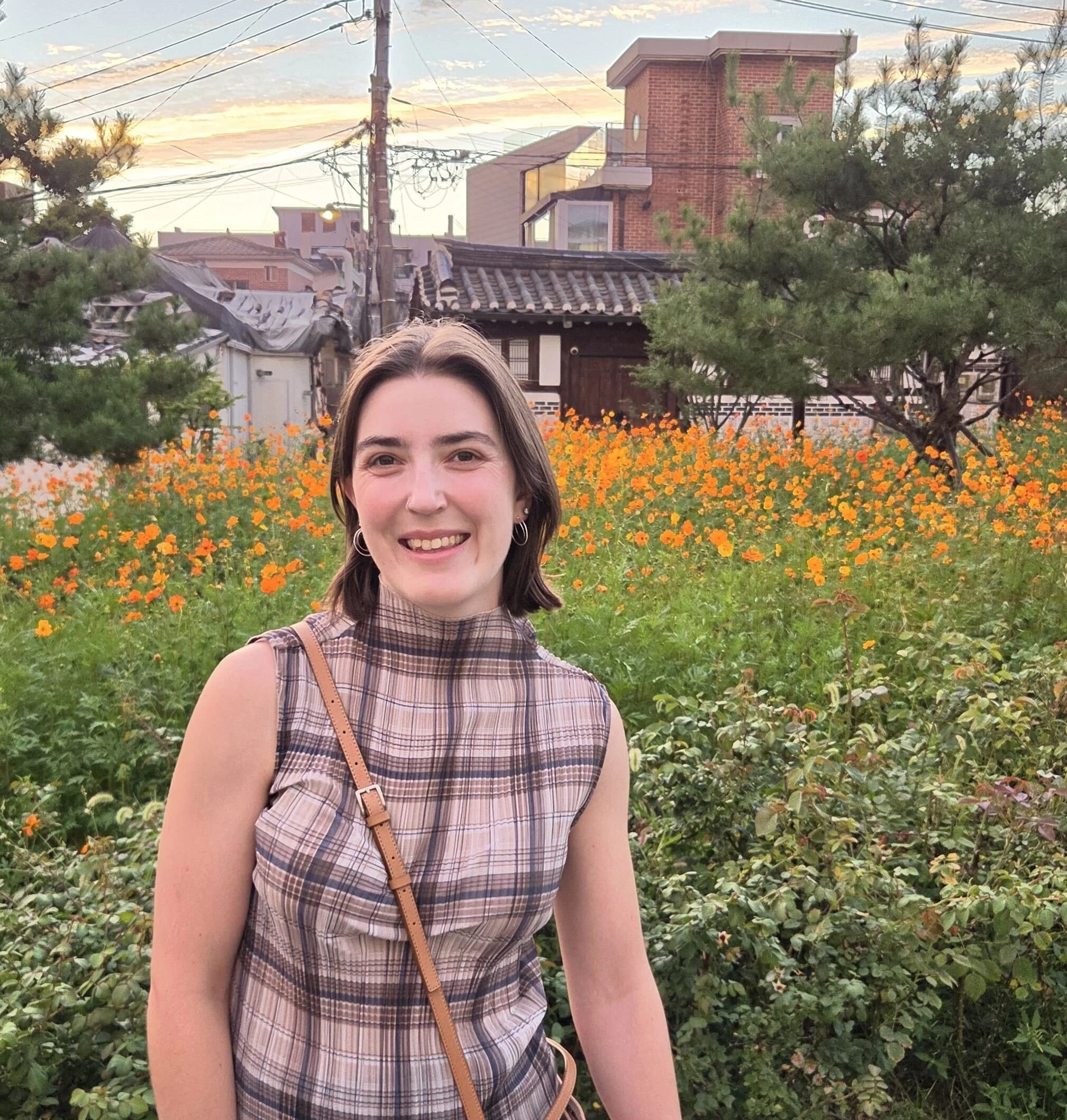
Lucy Kitch-Peck
Senior Process Development Engineer
Lucy joined Recovered Potential in 2026 as a Senior Process Development Engineer, translating lab-scale innovations into robust systems at real-world customer sites. She brings experience in industrial wastewater treatment, membrane development, and first-of-a-kind commercialization from Via Separations. She holds a B.S. in materials science and engineering from MIT, with a minor in energy studies. Lucy is excited to help realize RP's vision of treating wastewater as a valuable resource. An avid sci-fi reader, she credits Kim Stanley Robinson's The Ministry for the Future and Octavia Butler's Parable of the Sower with shaping her vocation.
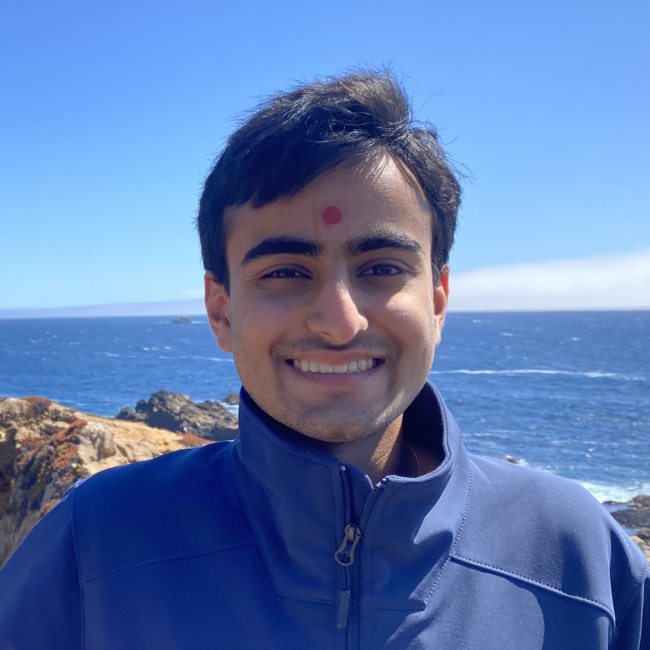
Akshar Bhagat
R&D and Field Deployment Intern
Akshar joined Recovered Potential in September 2026 to support bench-scale R&D and field deployment. He earned his BS in Chemistry and a minor in Data Science from UC Berkeley, where he researched molten salt corrosion in the SALT Group and built lab automation tools. He is a Bay Area local and enjoys DIY projects, fantasy football, and boba.

Prof. William Tarpeh, PhD
Founding Scientific Advisor
Will is an Assistant Professor at Stanford Chemical Engineering, where his research focuses on resource recovery from various wastewaters. His lab incubated RP in its earliest days, and he now advises the company. Will is the inventor of the electrochemical stripping (ECS) process, from his PhD at UC Berkeley, along with 4 other patented wastewater treatment technologies. He has been recognized with a MacArthur “Genius” Fellowship, NSF CAREER Award, Paul L. Busch Award, and listings on AIChE 35 Under 35, Forbes 30 Under 30 Science, NBCBLK's 28 Under 28 African American Innovators, and C&EN Talented Twelve.
Supported By
Recovered Potential’s work is strengthened by partnerships and programs that accelerate sustainable innovation. We’re proud to have received support from organizations including:






What’s new
We were selected as Activate Fellows in Cohort 2026!
Welcome TomKat summer interns and Impact Fellows!
We’re now operating out of our new lab in Menlo Park! Thanks to everyone who joined our lab warming party!
Pilot time! Supported by the Stanford TomKat Center Innovation Transfer Program.
We were selected for ARPA-E’s RECOVER program! In collaboration with the Tarpeh lab at Stanford University and the Guest lab at UIUC, we will recover ammonium, phosphorus, and magnesium from anaerobic digestate.